
What Is Active Breathwork?
A beginner's guide to the practice that can shift everything — from your nervous system to your sense of self.
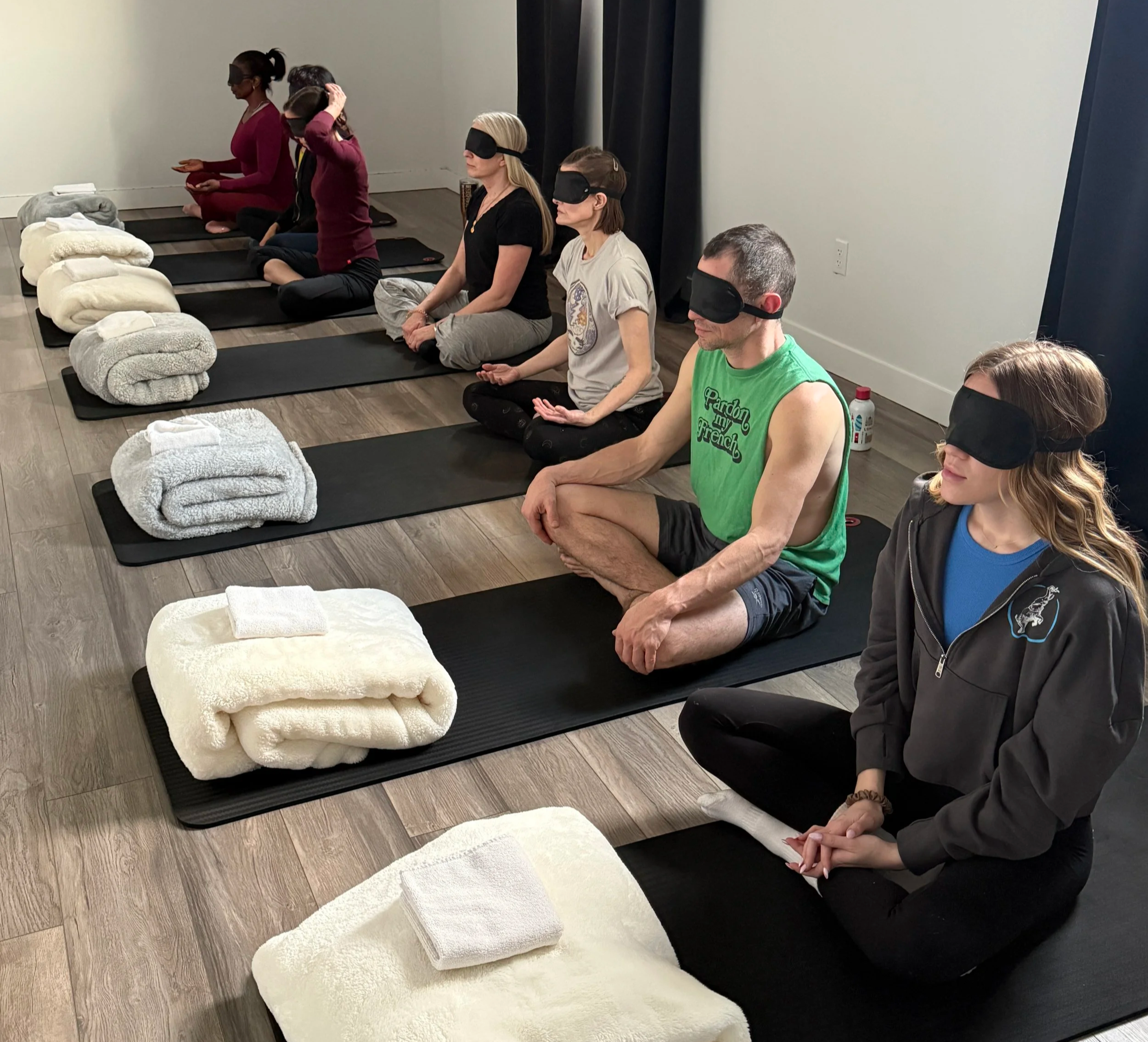
We breathe roughly 20,000 times a day, and most of those breaths happen completely outside our awareness. Breathing is the one autonomic function of the body we can consciously take the wheel of — and the moment we do, everything starts to change.
If you've been curious about breathwork but aren't sure where to start, this is an introduction to active breathwork: what it is, what happens in your body when you practice it, and why people walk away describing the experience as one of the most surprising things they've ever done for themselves.
First, a quick language check
Before we go further, a few terms worth knowing because “breathwork” is used loosely and can mean very different things:
Breath awareness is simply noticing your breath, without trying to change it.
Pranayama is the yogic practice of controlling the breath to move life-force energy (prana). Joseph Pilates was influenced by yoga and incorporated breathing patterns into his system of Pilates movements.
Breathwork is any practice where you deliberately manipulate or interrupt your breathing pattern.
Active breathwork — sometimes called transformational breathwork — is a specific style: a three-part breath (in through the belly, up into the chest, exhale out the mouth), practiced in a connected rhythm for an extended period of time.
That three-part breath is the engine of the practice. It's simple enough to learn in thirty seconds, and powerful enough to take you somewhere you didn't expect to go.
What actually happens in your body
Active breathwork works, in part, because it temporarily shifts the balance of oxygen and carbon dioxide in your blood. This is where it gets counterintuitive.
Most of us assume more oxygen is always better. But oxygen needs carbon dioxide to do its job. CO₂ is what signals your blood vessels to dilate and release oxygen into your tissues — this is called the Bohr effect. When you breathe rapidly and deeply for an extended period, your CO₂ levels drop, your blood becomes more alkaline, and your hemoglobin holds onto oxygen more tightly. Paradoxically, less oxygen reaches your brain tissue in that moment, which is part of why you may feel lightheaded, tingly, or experience a shift in ordinary consciousness that many people describe as the “breathwork state.”
This isn't dangerous in a safely facilitated session! It's temporary, and it's the doorway through which much of the emotional and energetic release of breathwork happens.
The nervous system piece
Controlled breathing also sends direct signals to your autonomic nervous system. Slow, nasal, diaphragmatic breathing activates the parasympathetic branch — the “rest and digest” state — which lowers heart rate, reduces cortisol (your body's main stress hormone), and tells your body it's safe. Regular breathwork, practiced over time, appears to help regulate baseline cortisol levels.
Faster, more activating breathing patterns wake up the sympathetic nervous system — the “fight or flight” side. Active breathwork deliberately moves you between these states, which is part of why it can feel like a workout for your nervous system. You're training the system to shift gears more fluidly.
Regulated breathing is also thought to help balance noradrenaline in the brain, the neurotransmitter tied to attention and focus — which is why many people report sharper mental clarity after a session.
What to expect in a session
What to expect in a session
A typical 1:1 active breathwork session runs about 60 minutes. After a brief grounding practice and some intention-setting, you'll lie down, close your eyes, and move through the three-part breath to a curated musical journey that builds and releases over roughly 25–30 minutes of active breathing. Then you rest.
During the active phase, people often experience things they weren't expecting. Some common ones:
Mental: resistance, internal chatter, thoughts about whether you're “doing it right.”
Physical: tingling, temperature changes, hand cramping (called tetany — slowing the exhale usually resolves it), or spontaneous shaking.
Emotional: tears, laughter, yelling, a wave of grief, joy, or something harder to name.
None of it is a sign that something is wrong. It's the practice working. The framework we teach is simple: name it, feel it, move it. Emotion is energy in motion, and active breathwork gives that energy a path out of the body.
Why people keep coming back
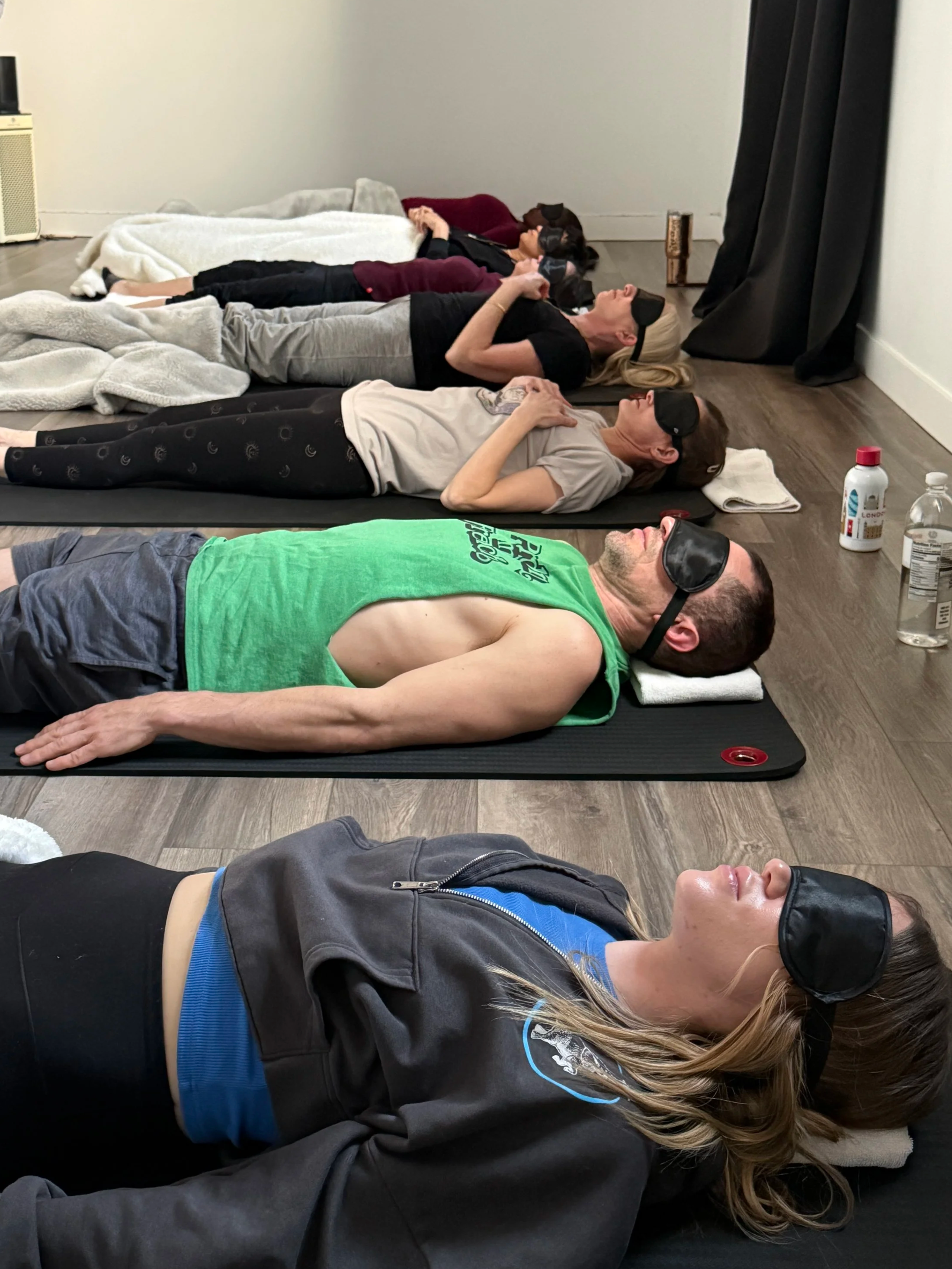
The benefits of a consistent breathwork practice are wide-ranging, and research is catching up to what contemplative traditions have said for centuries. Regular practitioners often report:
Reduced stress, anxiety, and overall cortisol load
Better sleep and more steady energy
Emotional release and integration of experiences that felt stuck
Increased mental clarity, focus, and creativity
A deeper sense of intuition and self-trust
Relief from chronic pain, tension, and headaches
Stronger lung capacity and more efficient breathing in daily life
But the thing most people actually talk about isn't on that list. It's a sense of returning — to themselves, to the present moment, to some quieter layer underneath the noise. Breathwork is a doorway. Where it takes you is personal.
A gentle invitation
If you're curious, the best thing you can do is try it. Breathwork is the kind of practice that makes more sense in your body than on a page. Come to a class taught by our Founder Brooke Alexandra, book a 1:1 session, and subscribe to the newsletter — I send out new practices, reflections, and offerings, and I'd love to have you along for the journey.
Your breath has been waiting for you. All you have to do is listen.